How Long Do STD Test Results Take? Timelines by Test Type
Most lab-based STD test results come back in 1 to 3 business days. Urine tests for chlamydia and gonorrhea are often the fastest, while syphilis, herpes and hepatitis blood tests and confirmatory testing can add a few days. Rapid HIV tests give results in about 30 minutes, but a negative may not be final until the window period passes.
Written by STD Clear Editorial Team · Published November 26, 2026 · Based on CDC guidance. General education, not personal medical advice.
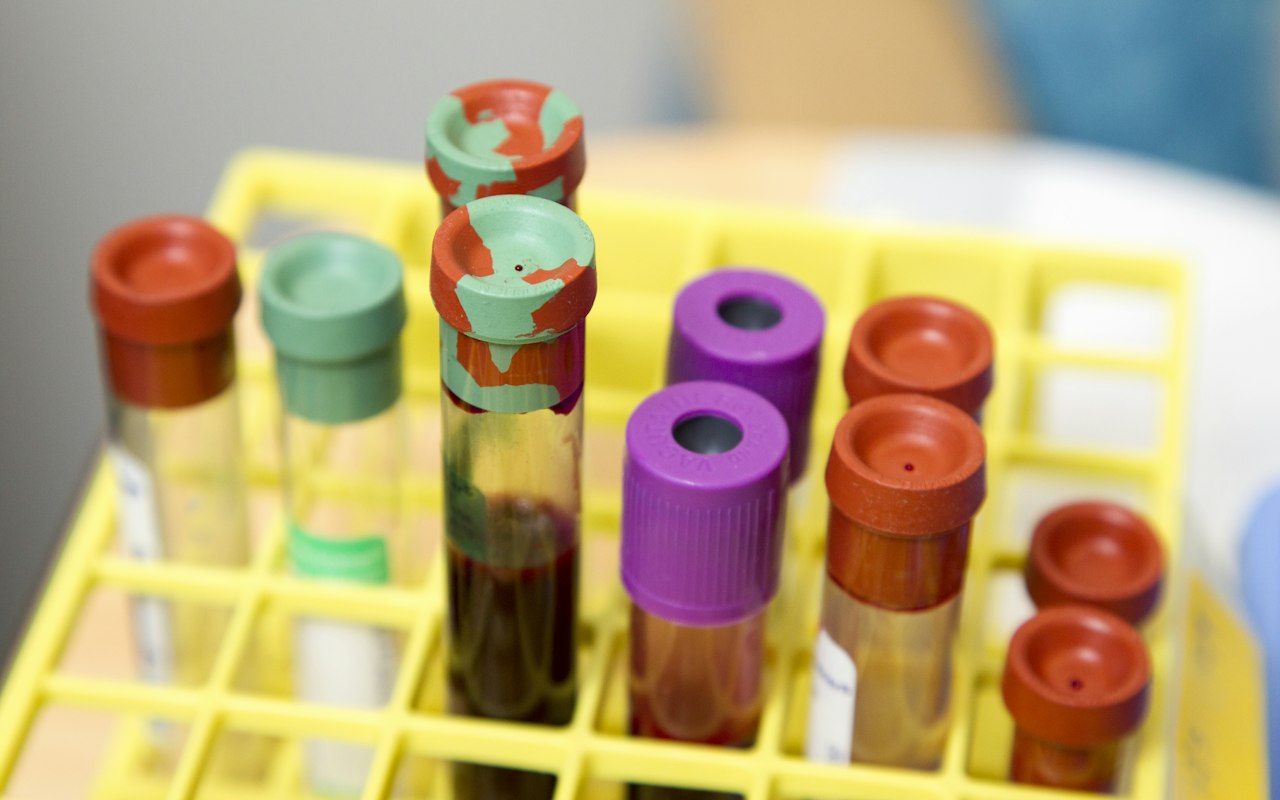
Photo: National Cancer Institute on Unsplash
How long do STD test results take?
For a standard lab panel, plan on 1 to 3 business days from the time you give your samples. The exact time depends on the infection, the lab, and whether the test is run in-house or sent out. Weekends and holidays count against you, because most labs process specimens on business days.
Speed also depends on the type of test. A rapid HIV test can read in minutes. A mailed home kit adds shipping time on both ends. A lab visit sits in the middle: the sample is collected in minutes, and the lab does the rest. That's why "how long does it take" has no single number. The honest answer is a range, and the table below breaks it out.
How long do results take for each type of STD test?
These are typical turnaround times after the sample reaches the lab. Your lab may be faster or slower, and the CDC notes that some lab results may take several days.
- Order, sample and lab time are separate clocks. A same-day lab visit gets your sample in quickly, but the result still depends on lab processing.
- Within a single panel, some results post before others. You may see your urine results first and your blood results a day later.
| Test type | Typical wait for results | Notes |
|---|---|---|
| Rapid HIV test (finger stick) | 30 minutes or less | Per the CDC. A positive needs lab confirmation. |
| HIV self-test | Within about 20 minutes | Per the CDC. Follow-up testing is needed after a reactive result. |
| Lab HIV test (blood) | 1–3 business days, sometimes longer | The CDC says it may take several days. |
| Chlamydia and gonorrhea (urine NAAT) | 1–3 business days | Usually among the quickest lab results. |
| Syphilis, herpes, hepatitis (blood) | 1–3 business days, sometimes more | Reactive screens may be followed by a second test. |
| Trichomoniasis, Mycoplasma genitalium (urine) | 1–3 business days | Run on the same urine sample as chlamydia and gonorrhea. |
| Mailed home kit | A few days total | Per the CDC, shipping and lab time can take a few days. |
The Complete Panel covers 12 tests for $249. Results in 1–2 days.
How long do HIV test results take?
HIV has the widest range. According to the CDC, rapid antibody tests and rapid antigen/antibody tests give results in 30 minutes or less, and self-tests in about 20 minutes. Lab-based tests may take several days.
The wait for a result is different from the window period, which is the time between exposure and when a test can detect HIV. The CDC says a lab antigen/antibody test can usually detect HIV 18 to 45 days after exposure, an antibody test 23 to 90 days, and a nucleic acid test (NAT) 10 to 33 days. A result that comes back fast can still be too early to count.
How long do chlamydia and gonorrhea results take?
Both are tested on the same urine sample with a nucleic acid amplification test (NAAT), and results usually come back within 1 to 3 business days. If you had oral or anal exposure, a clinician may recommend a throat or rectal swab, which is processed the same way.
Both chlamydia and gonorrhea are curable with antibiotics, so a quick result matters. The CDC's testing page notes that testing is how people find out and receive treatment.
Why do some STD test results take longer?
- The sample was collected late in the week or before a holiday, so it waits for the next processing day.
- The lab sends certain tests, like some hepatitis or herpes assays, to a reference lab.
- A screening result was reactive or unclear, and the lab runs a second confirmatory test. This is common with syphilis and HIV.
- The sample was insufficient or had to be recollected.
- A clinician has to review a positive or abnormal result before it is released.
Can you get STD test results the same day?
Sometimes. Rapid HIV tests and some point-of-care tests can give an answer in under an hour. Most full panels can't, because bacterial NAAT tests and several blood tests are run in a lab.
What you can do the same day is get tested. With STD Clear you order online and visit a nearby lab the same day, then your results arrive in your private account. To see what a panel actually covers, read what a full STD panel tests for.
What should you do while you wait for STD test results?
- Avoid sex or use condoms until you have results, especially if you have symptoms.
- If you were exposed recently, check the testing window so you know whether to retest later.
- Don't stop treatment you've already been prescribed, and don't self-treat with leftover antibiotics.
- If you may have been exposed to HIV in the last 72 hours, don't wait for a result. Ask about PEP right away.
What happens after you get your results?
A negative result means no infection was detected, and is only reliable if you tested after the window period for each infection. If you tested early, repeat the test later. See what a full STD panel includes and the testing window for each infection.
A positive result is not a dead end. Most bacterial STDs are curable, and others are manageable. At STD Clear, a clinician explains positive results and next steps. Choose the right scope up front: the Core Panel covers four infections, the Essential Panel adds herpes and hepatitis, and the Complete Panel is the broadest. See also STD testing for men and for women.
The short version
- Lab-based STD panels usually return results in 1 to 3 business days. Rapid and self-tests can take minutes, and mailed kits take a few days.
- The CDC says lab HIV tests may take several days, while rapid antibody tests and self-tests give results in 30 minutes or less.
- A fast result is not the same as a final result. Testing too soon after an exposure can miss an infection.
- A positive result that needs confirmation, or a sample that has to be re-run, adds time.
- Waiting is the wrong moment to skip precautions. Avoid sex or use condoms until you have results, and get tested again if you test early.
Related tests
Frequently asked questions
How long does it take to get STD test results?
Most lab-based STD results take 1 to 3 business days. Rapid HIV tests take about 30 minutes, and mailed home kits take a few days in total.
Can STD test results come back in 24 hours?
Sometimes, especially urine tests for chlamydia and gonorrhea. Whether it's 24 hours or several days depends on the lab and when the sample arrives.
Why is my STD test taking so long?
Common reasons are weekends or holidays, tests sent to a reference lab, a confirmatory test after a reactive screen, or a sample that needed to be recollected.
How long do HIV test results take?
Per the CDC, rapid tests take 30 minutes or less and self-tests about 20 minutes. Lab tests may take several days.
What STD shows up the fastest on a test?
Chlamydia and gonorrhea can often be detected within 1 to 2 weeks of exposure, while blood tests for herpes and hepatitis can take longer to turn positive.
Does a fast result mean it's accurate?
A rapid result can be accurate, but any test can miss an infection that is still in its window period. A negative that comes too early may need to be repeated.
What if I don't get my results?
Check your private account and spam folder first, then contact the lab or the testing service. Don't assume no news is good news.
Sources
This article is for general education and isn't a substitute for medical advice. If you have symptoms or a possible HIV exposure in the last 72 hours, seek care right away.