What Does a Full STD Panel Test For? (And What It Misses)
A full STD panel usually covers 7 to 14 infections. See exactly what's included, what most panels skip, like HPV and throat or rectal sites, and how to choose.
Written by STD Clear Editorial Team · Published November 25, 2026 · Based on CDC guidance. General education, not personal medical advice.
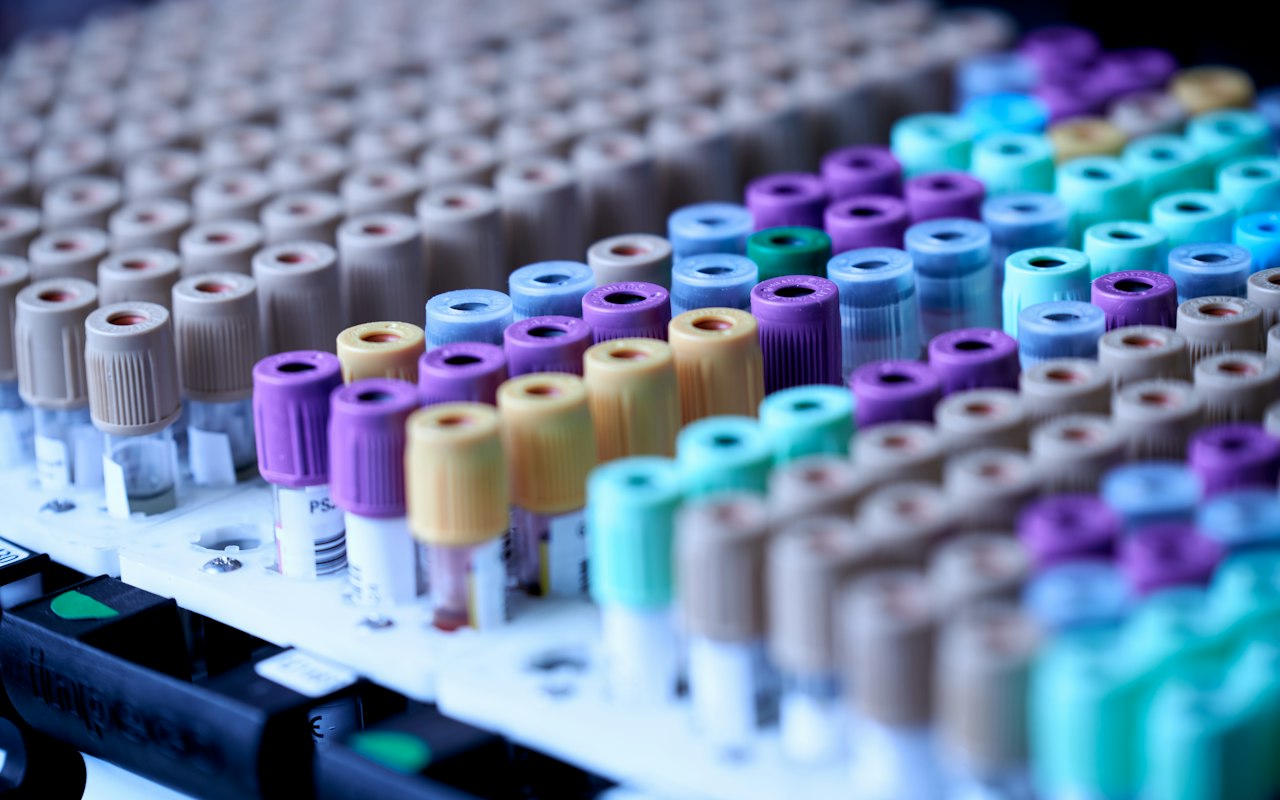
Photo: Testalize.me on Unsplash
A full STD panel usually tests for chlamydia, gonorrhea, HIV, syphilis, herpes 1 and 2, and hepatitis B and C, using a urine sample and a blood draw. Broader panels add trichomoniasis, hepatitis A and Mycoplasma genitalium. No standard panel tests for HPV in men, and urine tests don't check the throat or rectum.
- There's no official definition of "full panel." Depending on the lab, it can mean anywhere from 7 to 14 tests.
- The core of almost every panel is chlamydia, gonorrhea, HIV and syphilis. Herpes, hepatitis and trichomoniasis are where panels differ.
- HPV isn't on any standard STD panel, and the CDC says there's no test for a person's overall "HPV status."
- A urine test only checks the genital site. Oral or anal exposure may need a throat or rectal swab.
- Test after the window period for each infection, or a negative result may not be final.
What is a full STD panel?
A full STD panel is a group of lab tests ordered together to screen for the most common sexually transmitted infections in one visit. Usually that's a urine sample for the bacterial infections and a small blood draw for the viral ones, plus syphilis.
The word "full" is marketing, not medicine. No guideline defines what a full or complete panel has to include. Look at the national lab-order services and their "full" or "complete" panels range from 7 to 14 tests. Some count HIV-1 and HIV-2 as two tests, or herpes 1 and 2 as two. So the number on the box tells you less than the list of infections behind it.
That's why the useful question isn't "is this a full panel?" It's "which infections does it test, from which body site, and is it the right time to test?"
What infections does a full STD panel include?
Here's what a broad panel covers, how each infection is tested, and roughly when a test can reliably pick it up after an exposure.
- Chlamydia and gonorrhea are the backbone of every panel. Both are often silent and both are curable, which is exactly why screening matters.
- HIV and syphilis are blood tests. The CDC recommends everyone aged 13–64 get an HIV test at least once.
- Herpes 1 and 2 blood tests look for antibodies, so they can show an infection even without sores. They don't tell you where on the body the infection is.
- Hepatitis B and hepatitis C are blood-borne, and the CDC recommends every adult be screened for hepatitis C at least once.
- Trichomoniasis and Mycoplasma genitalium are common, often symptom-free, and left out of many standard panels.
| Infection | Sample | What the test looks for | Typically detectable |
|---|---|---|---|
| Chlamydia | Urine | Bacterial DNA (NAAT) | 1–2 weeks |
| Gonorrhea | Urine | Bacterial DNA (NAAT) | 1–2 weeks |
| HIV 1 & 2 | Blood | 4th-gen antigen/antibody | 18–45 days |
| Syphilis | Blood | RPR, with titer if reactive | 3–6 weeks |
| Herpes 1 (HSV-1) | Blood | Type-specific IgG antibodies | 4–12 weeks |
| Herpes 2 (HSV-2) | Blood | Type-specific IgG antibodies | 4–12 weeks |
| Hepatitis A | Blood | Antibodies (infection or vaccine) | 2–7 weeks |
| Hepatitis B | Blood | Surface antigen | 3–6 weeks |
| Hepatitis C | Blood | Antibodies, RNA if reactive | 8–11 weeks |
| Trichomoniasis | Urine | Parasite DNA (NAAT) | 1–4 weeks |
| Mycoplasma genitalium | Urine | Bacterial DNA (NAAT) | 2–4 weeks |
The Complete Panel covers 12 tests for $249. Results in 1–2 days.
What does a full STD panel not test for?
This is the part most panel pages skip. A "full" panel still has blind spots, and knowing them is how you avoid false reassurance.
- HPV. There's no HPV test on a standard STD panel. Per the CDC, there's no test for a person's overall "HPV status" and no approved test for HPV in the mouth or throat. Women are screened through cervical cancer screening instead.
- Throat and rectal infections. A urine test only finds chlamydia and gonorrhea at the genital site. If you've had oral or anal sex, the CDC's screening guidance supports testing the throat or rectum based on exposure. That takes a swab, not urine.
- Infections still in their window period. Test too soon after an exposure and the panel can come back negative even if you're infected. Our testing-window tool shows when to test for each one.
- Some infections that need a different test. Bacterial vaginosis and yeast infections aren't STDs and aren't on STD panels. Mpox needs a swab of a lesion.
What is included in a full STD panel for females?
The infections are the same for women and men, and so are the urine and blood samples. What changes is how you read the results and what to add.
Chlamydia and gonorrhea often cause no symptoms in women but can lead to pelvic inflammatory disease and fertility problems if missed. The CDC recommends yearly screening for sexually active women under 25. Trichomoniasis is more common in women, which is a good reason to choose a panel that includes it.
HPV is covered by cervical screening (Pap and HPV tests) with your gynecologist, not by an STD panel. Our STD testing for women page walks through which panel fits which situation.
What is included in a full STD panel for males?
Men get the same panel: urine for chlamydia, gonorrhea, trichomoniasis and Mgen, and blood for HIV, syphilis, herpes and hepatitis. Men are more likely than women to notice symptoms like burning or discharge, but plenty of infections in men are still silent.
There's no routine HPV test for men. For men who have sex with men, the CDC recommends at least yearly testing, including throat and rectal sites based on exposure, and more often for some. See STD testing for men for the details.
Do you need a full STD panel or a basic panel?
A basic panel is fine for routine screening. A broader one makes sense when the stakes or the uncertainty are higher. A simple way to decide:
- Core Panel: chlamydia, gonorrhea, HIV and syphilis. Good for a routine check or a new partner with no symptoms.
- Essential Panel: adds herpes 1 and 2 and hepatitis A, B and C. For a fuller picture, or if it's been a while since your last test.
- Complete Panel: adds trichomoniasis and Mycoplasma genitalium. Choose it if you have symptoms, a partner tested positive, or you want the broadest coverage in one visit.
How is a full STD panel done?
With STD Clear, you order online and a physician order is sent to a nearby lab. At the lab you give a urine sample and a quick blood draw, usually in a few minutes and with no appointment. Results go to your private account, and if anything is positive a clinician explains what it means and what comes next.
When should you get a full STD panel?
- With a new partner, or before stopping condoms with a partner.
- If you have symptoms such as burning, discharge, sores or a rash. Test now and don't wait out a window period.
- If a partner tells you they tested positive.
- Once a year if you're sexually active, and more often with multiple partners. See which test you need.
- If you think you were exposed to HIV in the last 72 hours, get emergency care about PEP first. Testing comes later.
Related tests
Frequently asked questions
What does a full STD panel include?
Most full panels test for chlamydia, gonorrhea, HIV, syphilis, herpes 1 and 2, and hepatitis B and C. Broader panels add hepatitis A, trichomoniasis and Mycoplasma genitalium. HPV isn't included.
What does a 10 panel STD test include?
It varies by lab, but a 10-test panel typically covers chlamydia, gonorrhea, HIV 1 and 2, syphilis, herpes 1 and 2, and hepatitis A, B and C. Our Essential Panel is a 10-test panel.
What is a 13 panel STD test?
A 13-test panel usually adds trichomoniasis and sometimes Mycoplasma genitalium or an early HIV RNA test to a 10-test panel. Always check the list of infections rather than the number.
Does a full STD panel test for HPV?
No. There's no HPV test on a standard STD panel and no approved HPV test for men. Women are screened for high-risk HPV through cervical cancer screening.
Does a full STD panel test your throat?
Not usually. Urine tests only detect chlamydia and gonorrhea at the genital site. Throat and rectal infections need a swab, which a clinician may recommend based on your exposure.
Is a full STD panel a blood test or a urine test?
Both. Urine is used for chlamydia, gonorrhea, trichomoniasis and Mgen. Blood is used for HIV, syphilis, herpes and hepatitis.
Can a full panel detect herpes without symptoms?
Yes. A type-specific blood test can detect antibodies to herpes 1 or 2 even without sores, though it can't show where the infection is or when you got it.
Sources
This article is for general education and isn't a substitute for medical advice. If you have symptoms or a possible HIV exposure in the last 72 hours, seek care right away.